Artificial Intelligence
From Manual SEO Audits to Intelligent Automation: Building an AI-Powered SEO Workflow with n8n

·4 min read
Search Engine Optimization (SEO) is one of the most important aspects of digital visibility, but traditional SEO audits are often slow, repetitive, and inefficient. Many marketers and agencies still perform competitor research manually by opening multiple tabs, comparing blog posts, checking keywords, and building reports by hand.
The problem is simple: manual SEO analysis consumes hours of work and still leaves room for missed opportunities.
To solve this challenge, I built an AI-powered SEO automation system using n8n that automatically crawls websites, analyzes competitor content, detects content gaps, and generates SEO reports without manual intervention. This article explains how the workflow operates, the technologies behind it, and why AI automation is transforming modern SEO operations.
The Problem with Traditional SEO Audits
Most SEO workflows still look like this:
Open multiple browser tabs
Analyze competitor pages manually
Compare topics and blog structures
Search for missing keywords
Write reports manually in documents
This process:
Takes hours or even days
Is difficult to scale
Increases human error
Misses hidden opportunities
For agencies handling multiple clients, the workload becomes even more overwhelming.
The Solution: AI-Powered SEO Automation Instead of performing these tasks manually, the workflow automates the entire SEO audit process using AI and workflow automation. The system:
Crawls websites automatically
Extracts and structures content
Uses AI to analyze topics and keywords
Detects missing content opportunities
Generates professional reports
Delivers results automatically via email
This transforms SEO analysis into a scalable and intelligent automation system. The Workflow Architecture (image below) is the workflow powering the AI SEO automation system:
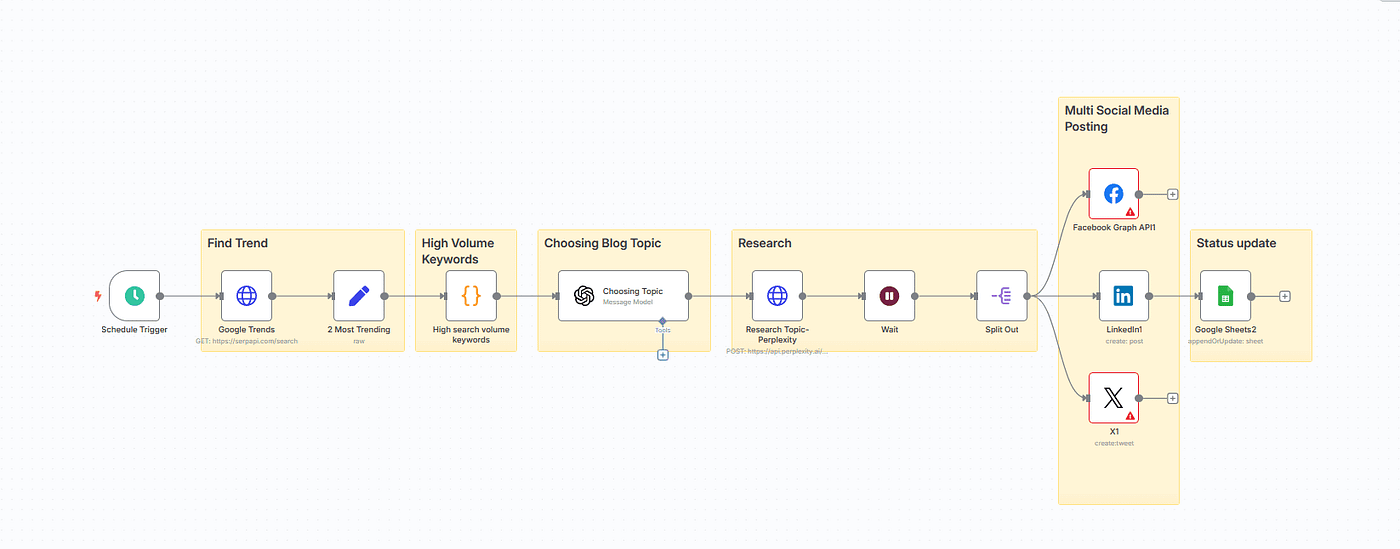
The workflow integrates multiple stages including crawling, AI analysis, report generation, and email delivery.
Step 1: User Input
The process begins when the user submits:
Their website URL
Competitor website URL
Email address
This information becomes the input for the automation pipeline.
Step 2: Automated Website Crawling
The workflow automatically:
Crawls both websites
Extracts URLs and page content
Collects site structure and metadata Instead of manually browsing pages, the system gathers all relevant informationautomatically.
This significantly reduces research time while improving consistency.
Step 3: AI Content Analysis
Once the data is collected, AI processing begins. The AI model:
Classifies website content
Extracts important keywords
Identifies topic clusters
Understands semantic relationships between pages
This allows the workflow to move beyond simple keyword matching into deeper contextual analysis. For example, the system can detect:
Missing content themes
Weak topic coverage
Areas where competitors dominate search visibility
Step 4: Content Gap Detection
This is the core intelligence layer of the workflow. The system compares both websites and identifies:
Missing topics on the target website
Competitor keyword opportunities
Structural SEO weaknesses
Untapped content areas Instead of manually comparing dozens of pages, AI performs the analysis automatically.
This provides businesses with actionable SEO insights within minutes.
Step 5: Automated Report Generation
After analysis is complete, the workflow:
Builds a structured SEO report in HTML format
Organizes findings clearly
Generates client-ready outputs
The report includes:
Keyword opportunities
Topic gaps
Competitive comparisons
Strategic recommendations
Finally, the system automatically sends the report to the user via email.
Why This Workflow Is Powerful?
This system transforms what is traditionally a manual service into an automated intelligence engine. It can be used for:
SEO agencies
Client audits
Lead generation funnels
Competitor analysis
Programmatic SEO campaigns
Content strategy planning
Instead of spending hours preparing reports manually, agencies can automate repetitive analysis and focus on strategic decision-making.
The Role of AI in Modern SEO
AI is changing SEO from a reactive process into an intelligent predictive system. By combining:
Automation workflows
AI language models
Website crawling
Structured reporting
Businesses can scale SEO operations far more efficiently than traditional methods allow. This is especially important as search competition continues to grow across industries.
Technologies Used
The workflow integrates several technologies:
n8n → Workflow orchestration
AI models → Content analysis and keyword intelligence
Web crawlers → Website data extraction
Email automation → Report delivery
HTML generation → Structured SEO reports
Together, these components create a fully automated SEO intelligence system.
What does the future of automation hold?
Automation is rapidly reshaping digital marketing workflows, and SEO is no exception. Tasks that once required hours of manual effort can now be handled intelligently through AI-powered automation systems. By combining AI with workflow automation in n8n, businesses and agencies can perform scalable competitor analysis, detect content opportunities faster, and generate professional SEO reports automatically.
This workflow demonstrates how modern automation is moving beyond simple task execution into intelligent decision-making systems capable of transforming how businesses approach digital growth.
Build smarter systems. Automate repetitive work. Scale with AI.
Share this blog
Written by Benedict Owino
Benedict is a HRM student at Moi University with a growing focus on AI-powered automation and digital workflows. He builds practical solutions using tools like n8n, OpenAI, etc, combining business understanding with technology to solve real-world problems and a tech writer at Wecncode.
More from Benedict Owino